
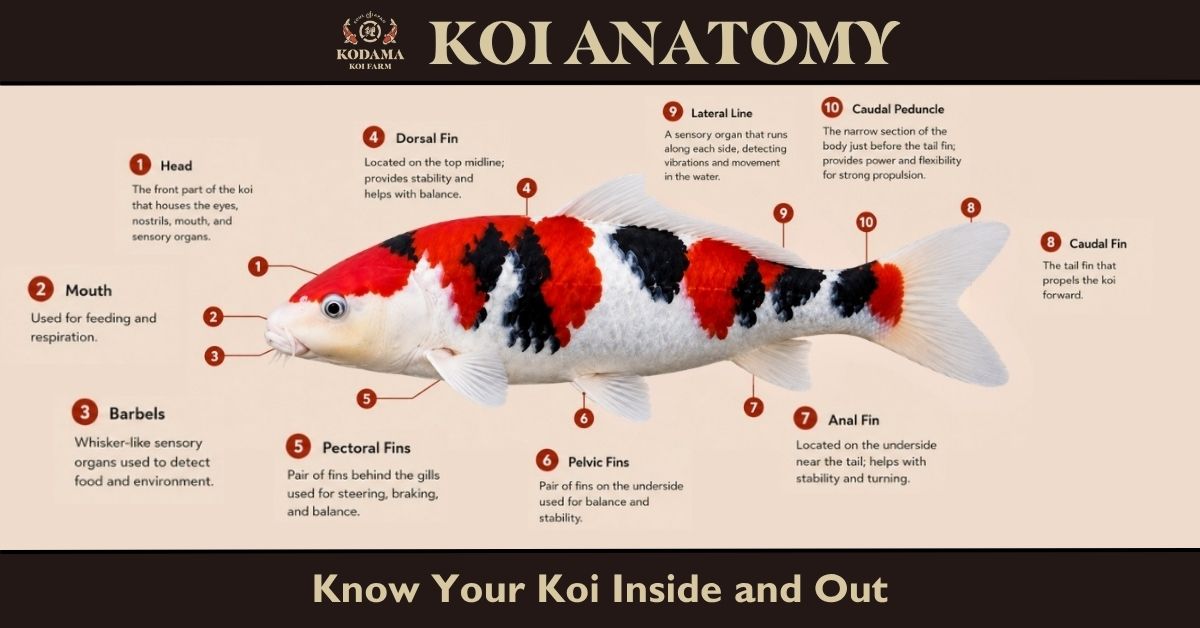
At Kodama Koi Farm, we view every Nishikigoi as a living masterpiece. As Koi Experts with over 50 years of heritage, we know that true appreciation of these creatures goes beyond their vibrant patterns; it begins with a deep understanding of their biology. Understanding Koi anatomy helps pond owners identify healthy fish, recognize injuries early, better understand Koi behavior, and communicate more confidently with veterinarians and fellow hobbyists.
Whether you are selecting a new champion for your collection or conducting a routine health check, knowing the intricate details of a Koi’s body is an essential part of the hobby and a core piece of Koi information every owner should master.
Key Takeaways
- Knowledge is Prevention: Understanding basic Koi anatomy is the most effective way for pond owners to identify healthy fish, spot injuries early, and communicate effectively with veterinarians.
- The Seven Fins: A healthy Koi uses a complex system of seven fins (one dorsal, one anal, one caudal, two pectoral, and two pelvic) to steer, hover, and propel themselves through the water.
- The Goldfish Distinction: Barbels are the sensory “whiskers” near a Koi’s mouth used for foraging, and they are the easiest way to tell a Koi apart from a large goldfish.
- Visual Health Checks: Routine inspections of your Koi’s scales, fin edges, barbels, and eyes can alert you to underlying water quality issues, parasites, or bacterial infections before they become severe.
External Koi Anatomy

A Koi’s exterior is perfectly adapted for life in a dynamic aquatic environment. Understanding the distinct regions of the body will help you monitor your fish’s overall condition.
Head Anatomy
- Eyes: Positioned on the sides of the head, a Koi’s eyes provide a wide field of vision to spot predators and food, though they have a blind spot directly in front of them.
- Mouth: Featuring a downward-facing (benthic) design, the mouth is perfectly angled for foraging along the pond floor.
- Nostrils (Nares): Located just above the mouth, these “U-shaped” tubes detect dissolved chemicals in the water, giving Koi an incredible sense of smell to locate nutrients.
- Barbels: These are the sensory organs near the mouth, acting as highly sensitive tools for navigation and tasting.
Do Koi Have Teeth? Koi have hidden pharyngeal teeth in the back of their throat that crush and grind food, while the gentle sensation during koi hand feeding comes from their soft lips, making these specialized teeth an essential part of koi anatomy and healthy digestion.
Body Anatomy
- Scales: Serving as the first line of defense, a Koi’s scales provide physical protection and are coated in a healthy slime coat to ward off parasites.
- Lateral Line: Running horizontally down the center of the body, the lateral line is a vital sensory organ that detects vibrations, water pressure changes, and movement.
- Body Shape: A premium fish, such as our featured Koi of the Week, should exhibit a robust, torpedo-like body shape that indicates strong genetics, proper diet, and excellent body conformation.
While body conformation determines a Koi’s structure, its patterns and markings play a major role in its overall beauty and show quality
Tail Anatomy
- Caudal Peduncle: This is the thick, muscular wrist-like section where the body meets the tail. It generates the core power for swimming.
- Tail: The primary source of forward momentum, driving the Koi effortlessly through the water.
Full Breakdown of Koi Fins

The majestic, gliding movement of a Koi is made possible by a highly specialized system of fins. Beyond their visual elegance, each fin serves a precise biological purpose, working in harmony to provide effortless balance, steering, and power.
How Many Fins Does a Koi Fish Have?
A healthy Koi has a total of seven fins, grouped into five distinct types based on where each fin is located. Each plays a specific role in balance, steering, stability, and propulsion.
1. Dorsal Fin
Located along the top ridge of the back, the dorsal fin acts like the keel of a ship, keeping the Koi stable and preventing it from rolling over while swimming.
2. Pectoral Fins (2)
Positioned just behind the gills on either side of the body, the pectoral fins act as the Koi’s steering and braking system, allowing for controlled turns, stopping, and depth adjustments.
3. Pelvic Fins (2)
Found on the lower belly, these paired fins help the Koi maintain balance, hover in place, and make precise movements through the water.
4. Anal Fin
Situated on the underside near the tail, the anal fin works alongside the dorsal fin to keep the Koi upright and stable as it swims.
5. Caudal (Tail) Fin
The caudal fin is the powerful tail fin that generates the thrust needed to propel the Koi smoothly and efficiently through the water.
6. Caudal Peduncle
Although not a fin, the caudal peduncle is the narrow, muscular section of the body just before the tail fin. It acts as a hinge, transferring power from the body to the tail to generate strong, efficient propulsion.
What Are Koi Barbels?
One of the most defining characteristics of a Koi is its barbels. But what are barbels, and why do Koi have them?
Barbels are fleshy, whisker-like sensory organs located on either side of the mouth. Because Koi are natural bottom-feeders, these barbels act like taste buds on the outside of their bodies, helping Koi find food in muddy or murky water where visibility is low.
Koi vs. Goldfish: If you are ever unsure whether you are looking at a young Koi or a large goldfish, the barbels are the easiest way to tell the two species apart. Koi have them; goldfish do not.

Internal Koi Anatomy
A Koi’s external beauty is supported by a complex and efficient internal system. Here is a simple overview of how these organs work together to keep a Koi healthy:
- Gills: The respiratory powerhouse. Gills extract oxygen from the water and expel carbon dioxide and ammonia.
Because the gills are essential for oxygen exchange and overall fish health, it’s important to recognize the signs of healthy and unhealthy gill tissue. Learn more in our guide to koi gills health.
- Swim Bladder: A two-chambered, gas-filled organ that controls buoyancy, allowing the fish to float at different depths without expending energy.
- Heart: A simple two-chambered pump that circulates oxygen-rich blood from the gills throughout the body.
- Digestive System: Unlike humans, Koi lack a true stomach. Their digestive system relies on a long intestinal tract to break down food, which is why feeding them high-quality, easily digestible Koi food is crucial.
- Reproductive Organs: Located near the swim bladder, these organs swell significantly in females during spawning season as they produce eggs.
Koi Skeleton
Do Koi have bones? Yes. The Koi skeleton is a highly evolved structure designed to support immense flexibility and movement.
- Skull: Protects the brain and supports the jaw and gill plates.
- Spine: The central framework that runs the length of the fish.
- Rib Bones: Protect the delicate internal organs from external pressure.
- Fin Rays: Cartilage-like bones that give structure and strength to the fins.
This skeletal framework allows the Koi to navigate tight turns and glide through the water with effortless grace.
How to Use Koi Anatomy to Spot Health Problems

Knowing what a healthy Koi looks like is your best defense against disease. If you’re inspecting a newly purchased fish, be sure to complete a proper quarantine tank setup before introducing it to your main pond. During routine health checks, there are specific areas to inspect:
Fins
Inspect the fins for frayed edges, red streaks, tears, or signs of rot. These changes are often linked to poor water quality, bacterial infections, or physical injury.
Scales & Body
Healthy scales should lie flat against the body. Missing scales, raised scales (pineconing), ulcers, or open sores can indicate injuries, parasites, or more serious internal health issues.
Barbels
The barbels should be intact, symmetrical, and free from redness or damage. Inflamed, shortened, or missing barbels may be a sign of bottom-rubbing caused by parasites or rough pond surfaces.
Eyes
A healthy Koi’s eyes should be clear and bright. Cloudiness, swelling, or bulging can point to bacterial infections, poor water quality, or other underlying health concerns.
To safely monitor your fish when introducing them to your pond, be sure to follow our detailed care and acclimation instructions. If you notice any of these symptoms, it is time to contact us or seek advice from a veterinarian to ensure your living jewels receive the proper care.
| Koi Anatomy Term | What It Means |
|---|---|
| Barbels | Sensory "whiskers" near the mouth that help koi find food. |
| Dorsal Fin | The top fin that helps stabilize the fish while swimming. |
| Caudal Fin | The tail fin that provides forward propulsion |
| Pectoral Fins | Side fins behind the gills that help with steering and maneuvering. |
| Pelvic Fins | Lower belly fins that assist with balance and hovering. |
| Anal Fin | The fin on the underside near the tail that helps maintain stability. |
| Lateral Line | A sensory line running along the side of the body that detects movement and vibrations in the water. |
| Caudal Peduncle | The muscular section connects the body to the tail fin, providing swimming power. |
Frequently Asked Questions
How many fins does a koi fish have?
A Koi has a total of seven fins: one dorsal, one anal, one caudal (tail), two pectoral, and two pelvic fins.
What are the whiskers on a koi fish called?
The whisker-like appendages on a Koi’s face are called barbels. They are sensory organs used to find food.
Do koi fish have bones?
Yes, Koi are teleosts (bony fish). They have a complex skeleton including a skull, spine, rib bones, and fin rays.
What is the dorsal fin used for?
The dorsal fin acts like the keel of a boat, keeping the Koi upright and stable as it navigates through the water.
Can koi regrow damaged fins?
Yes, if a fin is torn or damaged, it can often regrow provided the base (fin ray) is intact and the pond water is kept in pristine, healthy condition.

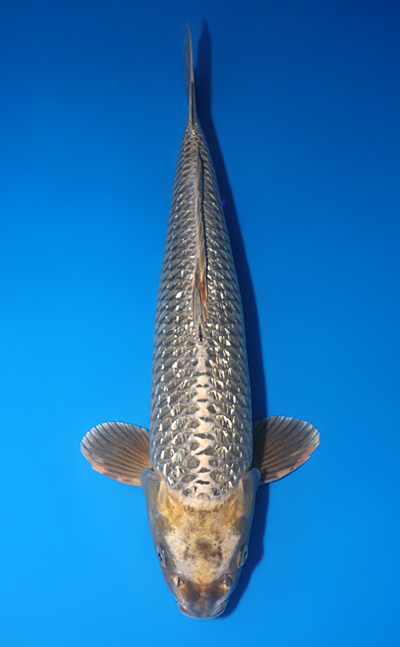 Ginrin Soragoi – koi #y0714s030
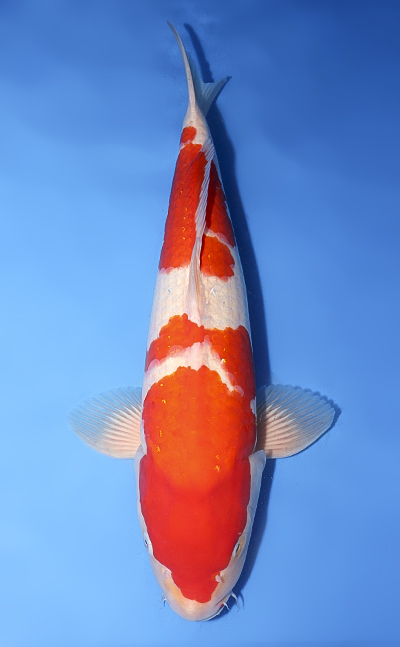 Kohaku – koi #y0619s008-re
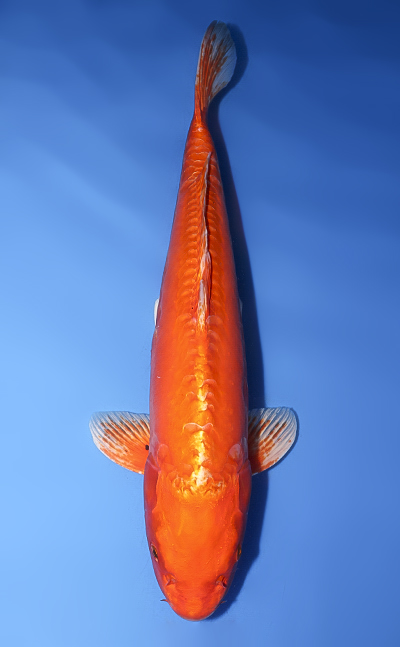 Doitsu Orange Ogon – koi #y0619s005-re
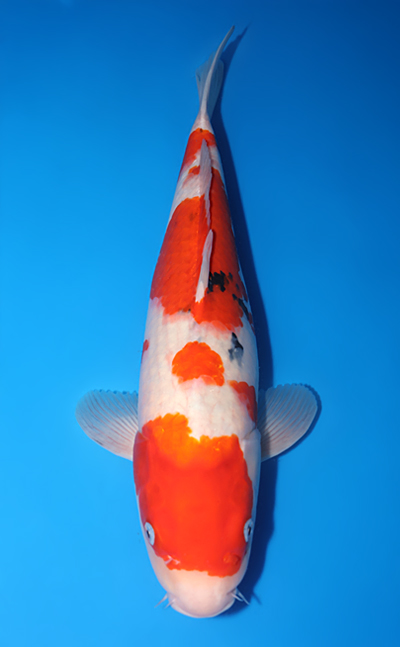 Taisho Sanke – koi #y0618s013