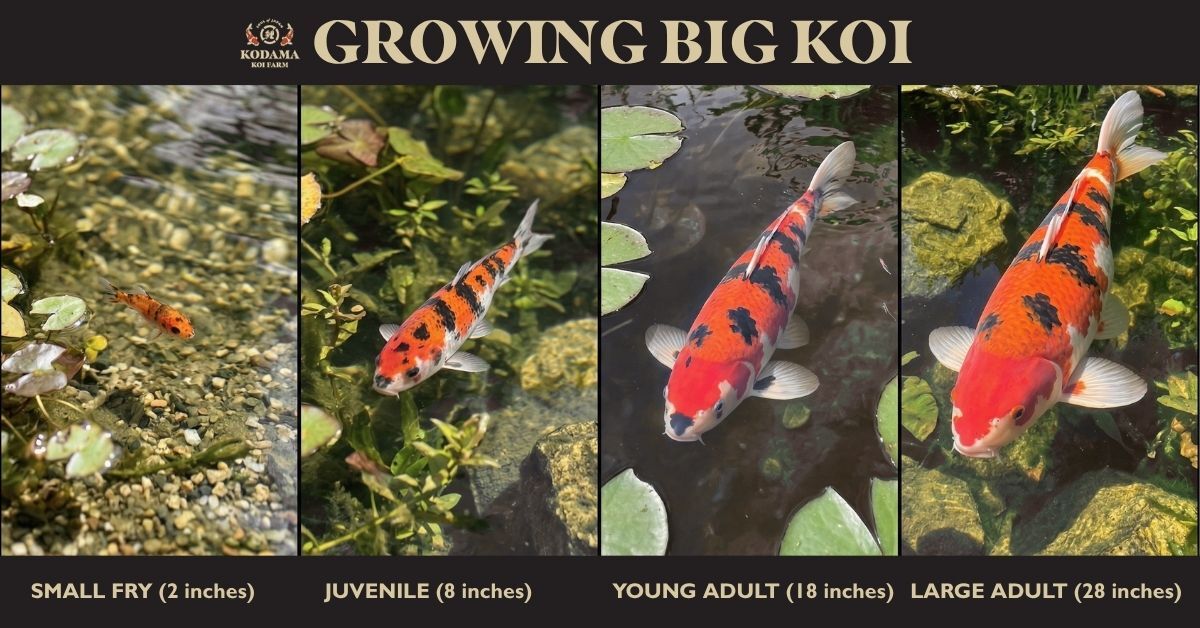
How Can You Grow Big Koi Successfully?
At Kodama Koi Farm, we often get asked why some koi develop into massive, show-quality centerpiece fish while others remain small and underwhelming for years.
From our experience, it’s clear that most koi don’t fail to grow because of genetics alone but because their environment, care system, and management practices are not optimized for true growth.
The Science Behind Real Growth (Not Luck) Grow Bigger, Healthier Koi
Most koi owners believe that achieving large, high-quality koi is purely genetics or luck—but the truth is that koi growth is highly controllable when the right conditions are consistently maintained.
With proper feeding, stable pond water quality, and a well-designed pond environment, koi can reach their full genetic potential much faster and more reliably than most people expect.
Essential Basics of Koi Growth You Must Understand First
Before you can successfully grow big koi, you need to understand the basic science behind how koi grow. The growth rate of a koi is not random—it is determined by a mix of genetics, environment, diet, and water quality. Even if two koi are the same age, they can grow at completely different speeds depending on these conditions.
Growth Potential vs Limitations
Every koi is born with a genetic growth ceiling, which determines its maximum possible size. However, reaching that potential depends entirely on its environment. Poor water conditions, overcrowding, or low-quality nutrition can severely limit growth, preventing koi from ever reaching their true big size.
Natural Growth Stages of Koi
Koi go through three main growth stages: rapid juvenile growth, steady adolescent development, and slow adult maturation. The fastest and most important growth phase happens early in life, where proper care has the greatest impact on final size.
Why Some Koi Become Large While Others Stay Small
The difference between big koi and small koi is usually environmental, not just genetic. Koi that are raised in spacious ponds with excellent filtration, consistent feeding, and low stress tend to grow much larger. In contrast, poor conditions permanently restrict growth, even if the koi has strong genetic potential.
| STAGE | DESCRIPTION |
|---|---|
| Foundation Stage (1–2 Years) | The first 1–2 years represent the foundation phase of koi growth, where strong genetics, stable water conditions, and proper feeding begin shaping their long-term potential. During this stage, koi develop their body structure, but size gains are still moderate and highly dependent on care quality. |
| Growth Acceleration Stage | As koi enter the growth acceleration phase, their development speed increases significantly when conditions are ideal. This is where feeding strategy, pond space, and water quality play a major role in unlocking faster size gains and improved body thickness. |
| Mature Koi Stage | In the mature koi stage, growth begins to slow as fish approach their genetic limit. At this point, body refinement and color development become more dominant than rapid size increase. |
| STAGE | AGE RANGE | AVERAGE SIZE | CHARACTERISTIC |
|---|---|---|---|
| Fry Stage | 0–4 weeks | 0.5 – 1 inch | Newly hatched, very fragile, rapid early development |
| Juvenile Stage | 1–6 months | 1 – 6 inches | Fast growth begins, colors start to appear |
| Tosai (Year 1) | 6–12 months | 6 – 12 inches | Body structure forming, color patterns becoming more visible |
| Nisai (Year 2) | 1–2 years | 12 – 20 inches | Noticeable size increase, stronger body shape, improved coloration |
| Sansai (Year 3) | 2–3 years | 20 – 26 inches | Entering maturity, body thickens, colors deepen |
| Adult Koi | 3–6 years | 24 – 32 inches | Slower growth, peak beauty and body conformation |
| Mature Koi | 6+ years | 30+ inches (if optimal) | Full size potential reached, growth slows significantly |
Large Koi Collection Preview
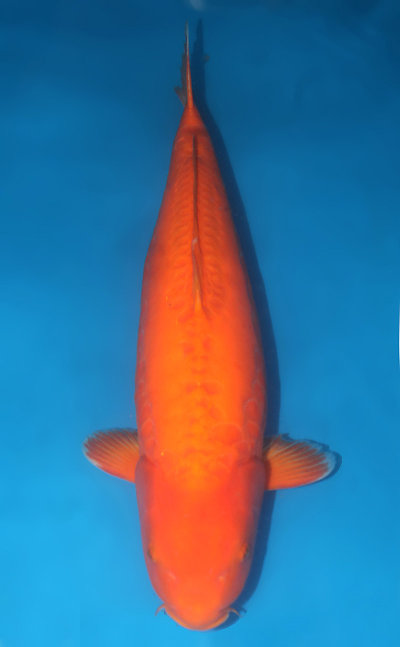
Jumbo Koi Doitsu Benigoi
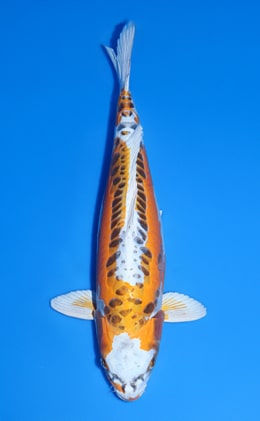
Jumbo Koi Doitsu Kujyaku
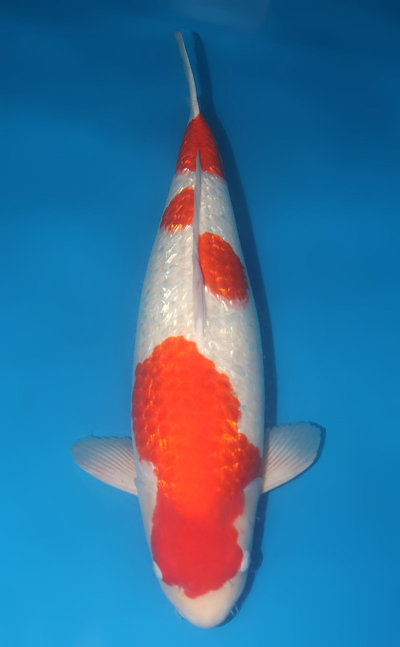
Jumbo Koi Ginrin Kohaku
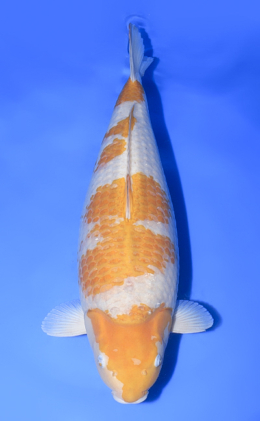
Jumbo Koi Kouyo
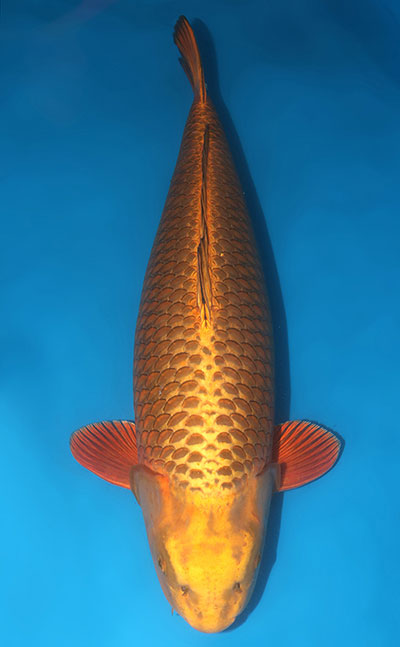
Jumbo Koi Mukashi Ogon
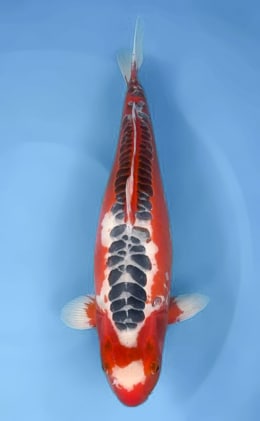
Jumbo Koi Shusui
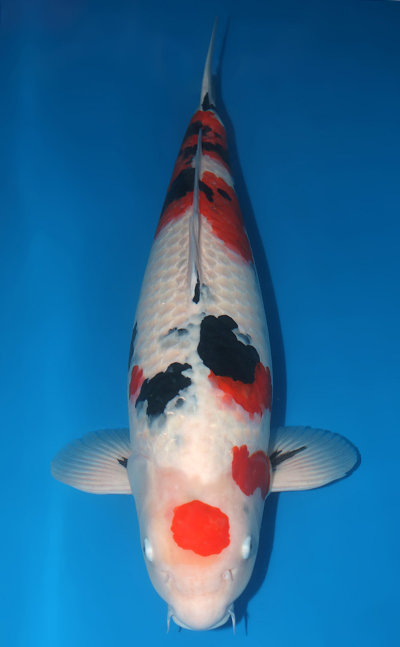
Jumbo Koi Taisho Sanke
Powerful Growth Drivers That Control Koi Size
Growth = Genetics + Food + Water Quality + Space + Stability
To grow large koi successfully, it is important to understand the key environmental and biological factors that directly influence their growth rate and final size. These core drivers work together throughout every stage of development, shaping not only how fast koi grow but also how large and healthy they can become. When properly managed, they create the ideal conditions for consistent and long-term growth performance.
What Actually Makes Koi Grow Big?
Before diving into the details, it’s important to understand that koi growth isn’t driven by a single factor, it’s the result of multiple elements working together. Think of this as your mental framework for growing large, healthy koi.
🧬 Genetics (The Foundation)
Genetics determine your koi’s maximum potential size, body shape, and growth rate. Even in perfect conditions, a koi can only grow as large as its genetic makeup allows, this is why selecting high-quality koi from the start is critical.
💧 Water Quality (The Environment)
Clean, stable water is one of the biggest drivers of growth. Poor water quality creates stress, slows metabolism, and limits development, while optimal conditions keeps koi healthy while maximizing growth
🍽️ Nutrition (The Fuel)
Koi need a balanced, high-quality diet to support rapid growth. Protein, vitamins, and proper feeding frequency all play a major role in how quickly and how well your koi develop.
🌊 Space (The Limitation Factor)
Koi require enough space to swim freely and grow properly. Overcrowded ponds restrict movement, reduce oxygen levels, and can significantly stunt growth over time.
🔄 Maintenance (The Stability Factor)
Consistency is what ties everything together. Regular water changes, proper filtration upkeep, and stable routines prevent stress and create an environment where koi can steadily grow to their full potential.
Nutrition & Feeding Strategy for Maximum Koi Growth
A proper koi feeding plan is one of the most important foundations for developing large, healthy koi. Nutrition directly affects growth speed, body shape, and overall strength, making it essential to understand how to feed correctly throughout different stages and conditions.
Pond Setup Requirements to Grow Large Koi
To grow large, healthy koi, your pond must be designed for long-term growth, not just decoration. Four key elements determine whether your koi can reach their full potential:
- Space matters most: Provide enough water volume per fish and avoid overcrowding to reduce stress and support steady growth.
- Depth ensures stability: A deeper pond (ideally 4–6 feet or more) helps regulate temperature and creates a safer, more stable environment.
- Strong filtration is essential: Your system must efficiently process waste and maintain clean, balanced water to prevent growth-limiting toxins.
- Aeration drives metabolism: High oxygen levels improve digestion, energy use, and overall growth performance.


Grow bigger koi by matching koi size with pond size—large koi need large ponds. Learn ideal stocking balance and guide
Not Getting the Growth You Expect? Check Your Koi’s Health First
Even with perfect feeding, water quality, and pond setup, koi won’t grow properly if they are stressed or unhealthy. Growth problems are often early signs of underlying health issues that go unnoticed.
If your koi are showing slow growth, loss of appetite, or unusual behavior, it may not be a setup problem—it could be a health condition affecting their development.

Expert-Level Techniques for Large Koi Results
At Kodama Koi Farm, we don’t rely on basic care alone—we apply advanced growth strategies to consistently achieve Large -class koi. Once the fundamentals are in place, we focus on growth acceleration routines that refine feeding timing, improve digestion efficiency, and maintain ultra-stable water conditions.
We also adjust our seasonal growth strategy carefully, because koi metabolism changes throughout the year. By adapting feeding levels, water temperature management, and activity cycles to each season, we keep koi in an optimal growth state for as long as possible.
We also use selective feeding techniques to maximize growth output during peak development periods, ensuring koi receive high-protein nutrition exactly when their bodies can use it most efficiently. Space management is another key principle in our system.

Watch this video for more info on “How Large is a Jumbo Koi?”
Common Growth Problems vs Proven Fixes for Jumbo Koi Development
Before koi can reach their full jumbo growth potential, it’s important to understand what commonly holds them back—and how to fix it. Most growth issues don’t come from genetics, but from environmental stress, poor feeding habits, and water quality problems. This section breaks down the most frequent growth blockers and the proven solutions to correct them, helping you quickly restore healthy, fast growth in your koi.
- Overcrowding issues – Too many koi in one pond reduces space, oxygen, and food access.
Improve pond spacing – Reduce stock density and give koi more swimming room for better growth flow.
- Poor diet mistakes – Low-quality or unbalanced food slows growth and weakens body development
Correct feeding strategy – Switch to high-protein, growth-focused koi food with proper feeding schedule.
- Stress from poor water quality – High ammonia, nitrites, or dirty water slows metabolism
Upgrade filtration system – Strengthen biofiltration and maintain stable, clean water conditions.
- Disease and parasites – Health issues reduce appetite and stop growth completely
Health recovery management – Treat infections early and maintain preventive pond hygiene practices.
- Wrong temperature conditions – Cold or unstable water slows digestion and growth rate
Stabilize pond temperature – Optimize seasonal care and maintain consistent temperature ranges for feeding efficiency.
Seasonal Growth Strategy for Koi (Year-Round Growth Optimization)
Koi growth is not constant throughout the year—it changes with the seasons. Understanding how temperature and metabolism affect feeding and development allows you to maximize growth during peak periods while protecting koi during slower months.
Winter = Growth Slowdown (Maintenance Mode)
In colder temperatures, koi metabolism slows significantly, and growth almost stops.| What happens: | What to do: |
|---|---|
|
|

Autumn = Conditioning Phase
As temperatures start to drop, koi begin preparing for cooler conditions by slowing growth and building energy reserves.| What happens: | What to do: |
|---|---|
|
|

Spring = Growth Acceleration
As water temperatures begin to rise, koi metabolism gradually increases, triggering the start of active growth.| What happens: | What to do: |
|---|---|
|
|

Summer = Peak Feeding & Maximum Growth
Summer is the most important growth period of the year. Warm, stable water allows koi to metabolize food efficiently and convert it into body mass.| What happens: | What to do: |
|---|---|
|
|

Growing Stunning Big Koi
Growing truly stunning big koi is never the result of a single factor, it is the outcome of a complete system working in harmony. Genetics, water quality, oxygen levels, pond environment, temperature stability, and precise nutrition all come together to shape how far a koi can truly develop. When even one of these elements is overlooked, growth potential is limited.
The real secret behind large koi is consistency over time. Daily care, stable water conditions, and disciplined feeding routines matter far more than short bursts of effort. Koi growth is a long-term process, and the most impressive results always come from patience, balance, and commitment to the full care system.
For keepers who want to go beyond trial and error, guidance from proven experts makes all the difference. Kodama Koi Farm has built a global reputation for producing and selecting world-class big koi through decades of experience, selective breeding, and hands-on expertise.
Their success comes from understanding exactly what it takes to develop koi with exceptional size, body structure, and quality. If your goal is to raise truly impressive big koi, don’t rely on just one method, apply the full system.
And when you’re ready to take the next step, Kodama Koi Farm is ready to help guide that journey with trusted knowledge, proven breeding lines, and a legacy of excellence in big koi development.
FAQ – Growing Big & Healthy Koi
How often should I feed koi for maximum growth?
Feed koi 2–4 times daily in small portions. Consistent feeding supports steady growth, improves digestion, and prevents waste buildup that can harm water quality and slow development.
Does water temperature affect koi growth?
Yes, temperature strongly affects metabolism. Warm, stable water increases appetite and digestion in koi fish, while cold temperatures slow activity, reduce feeding response, and significantly limit overall growth potential.
How does water quality impact koi size?
Poor water quality increases stress and weakens immunity. High ammonia or nitrite levels reduce feeding efficiency, causing slower growth and preventing koi from reaching their full genetic size potential.
Can overcrowding affect koi growth?
Yes, overcrowding increases competition for food, reduces oxygen levels, and raises waste buildup. These conditions create stress, which directly slows growth and limits the development of larger koi sizes.
Do koi stop growing when they reach a certain age?
Koi do not fully stop growing but growth slows with age. With proper care, nutrition, and water quality, they can continue developing slowly throughout their lifespan.
Is filtration important for koi growth?
Strong filtration maintains clean, stable water by removing toxins and waste. This allows koi to use energy for growth instead of survival, supporting healthier and faster development over time.
Does sunlight help koi grow faster?
Moderate sunlight supports natural pond balance and algae growth, which contributes to ecosystem health. However, excessive heat or direct exposure can stress koi and negatively affect growth performance.
How long does it take to grow jumbo koi?
Reaching jumbo size may take several years. Growth depends on genetics, feeding strategy, water quality, and environment. Consistency is key to achieving large, high-quality koi development.
Can stress stop koi from growing?
Yes, stress from poor water conditions, overcrowding, or predators reduces appetite and weakens metabolism. This directly slows growth and can temporarily halt development until conditions improve.
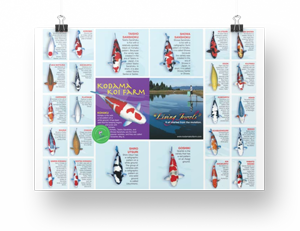
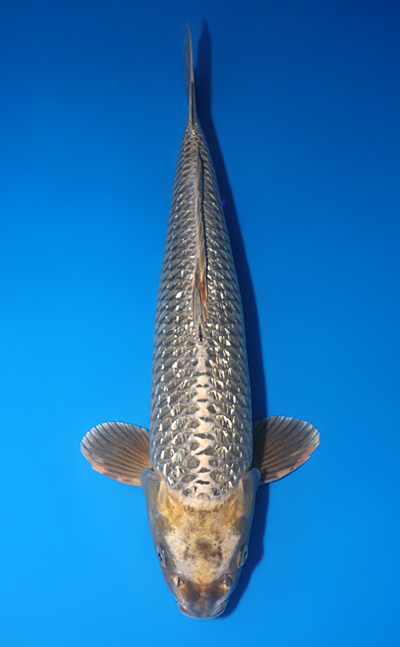 Ginrin Soragoi – koi #y0714s030
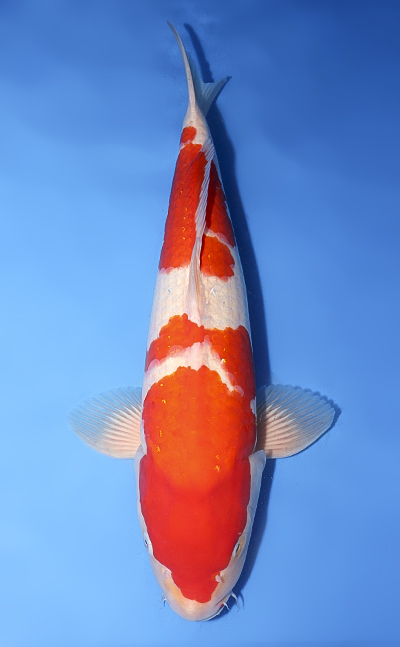 Kohaku – koi #y0619s008-re
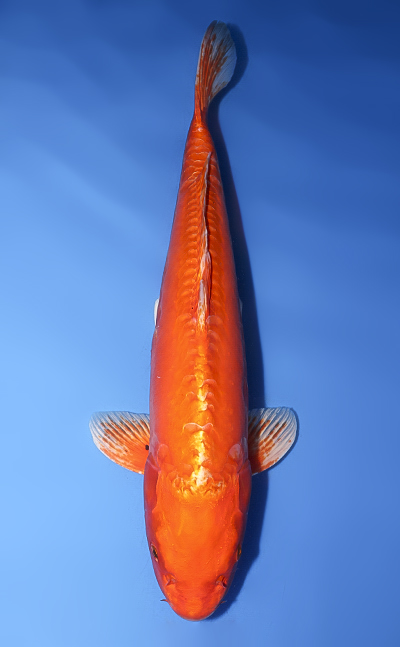 Doitsu Orange Ogon – koi #y0619s005-re
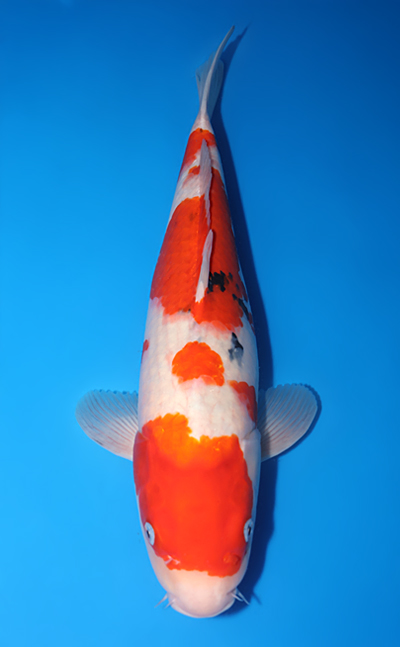 Taisho Sanke – koi #y0618s013